An ex-insider’s read on the Cvent rebranding — what the new identity actually signals for event profs, Cvent experts and the wider MICE industry.
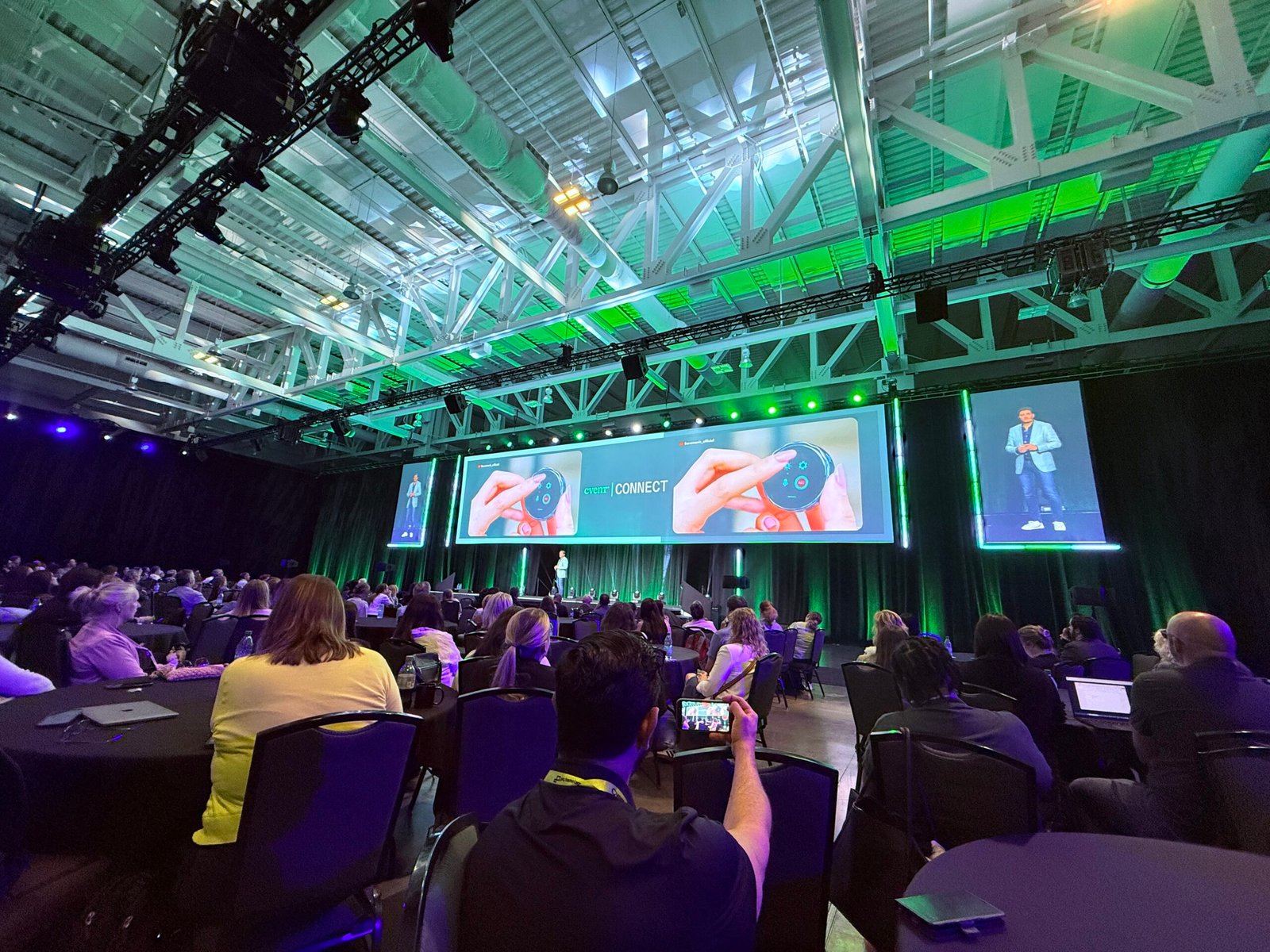
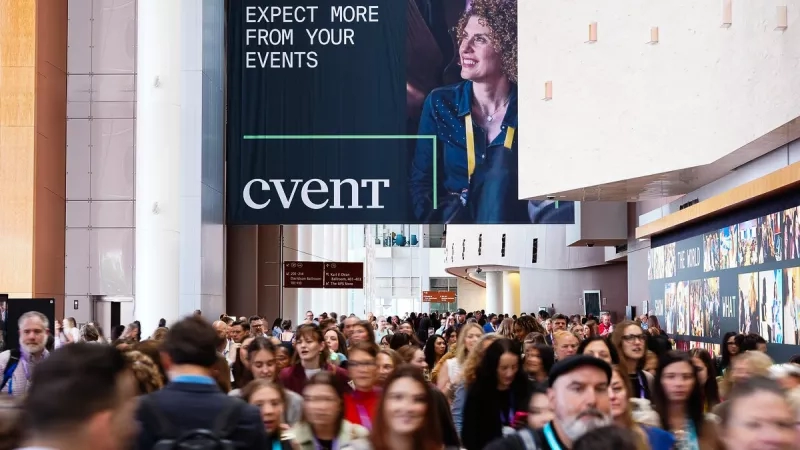
There was something slightly surreal about walking into Cvent CONNECT this year.
It was my first Cvent CONNECT since leaving Cvent. For years, this wasn’t a platform I used — it was a significant part of my professional life. I worked inside the ecosystem, alongside some of the sharpest Cvent experts in the business. I understood the product from the operational side. I saw how event teams actually used the technology, where they got stuck, and what they quietly worked around. I watched the company move through several different chapters of this industry.
So walking back in — not as an employee, but as someone looking at Cvent from the outside — gave me a very different vantage point.
And the first thing I noticed wasn’t the product.
It was the green.
You don’t ease into a rebrand at this scale. You walk into a room and it’s already everywhere.
Green is the outcome. The blueprint is the craft
At first glance, the Cvent rebranding reads as a visual exercise — a big company deciding it was time to look newer. The longer I looked, the more I thought the colour was doing real strategic work.
Performance green. Go, growth, momentum, a positive result. Amy Lucia, Cvent’s CMO, put it best in her post on the rebrand when she asked whether anyone else relates to a CMO who wants every metric on her scorecard to turn green. That’s exactly the right instinct, because it’s the colour you want to see when you’re staring at a dashboard asking whether you’re moving in the right direction.
But the detail I found more interesting was the one most people walked past: the linework running through the new graphic system is drawn from room diagramming layouts and blueprints.
Look at the corners of the frame. That’s the blueprint system, hiding in plain sight on every screen in the building.
That’s the half of the story that speaks to anyone who has actually built an event. Green is the outcome. The blueprint is the craft. Every event — in person, digital, 80 people or 8,000 — begins as a plan on a page, drawn by someone thinking hard about how a room should feel. A brand system that holds both the result and the work behind it is a brand system built by people who know what this job involves.
(There’s a third detail for anyone who enjoys this sort of thing: the shortened crossbar on the wordmark’s “T” is a deliberate nod to technology. Every element here was argued about. You can tell.)
The Bar Cvent just set for itself
The line getting the most attention is the purpose statement: Let’s Show the World What Events Can Do.
But the line that I think actually matters is the brand promise sitting alongside it: Expect More from Your Events™.
Read that again, because it cuts both ways.
Yes, it’s a challenge to event profs — expect more from what your events achieve, stop settling for attendance as the headline number. But it is also, unavoidably, an invitation for customers to expect more from the platform running those events. You cannot tell an industry to raise its standards without raising the standard you’re measured against.
A promise this specific is a promise customers get to hold you to.
That’s a genuinely bold thing for a market leader to say out loud. Most incumbents avoid promises that can be checked.
And this one comes attached to a number: a commitment to invest a billion dollars in technology innovation over the next three years. That’s what converts a tagline into something with consequences. Brand language is cheap. Capital allocation isn’t.
What customers actually asked for
The part of Amy’s post I’d point people to is the section on how this was built. Cvent worked with Wolff Olins, took in more than 1,500 external inputs, and pulled a group of customers in close. Those customers came back with three things: keep us at the centre, simplify so we can get our arms around everything you offer, and modernize how you show up.
Sit with the middle one for a second.
Simplify so we can get our arms around everything you offer.
Any of the Cvent experts who have worked deep inside this ecosystem know precisely what that means. Registration. Websites. Email. Attendee experience. Onsite technology. Meetings. Lead capture. Reporting. Integrations. And now a rapidly expanding AI layer sitting across all of it.
The challenge for Cvent has not been whether it has enough capability. It hasn’t been that for years. The challenge is how all that capability comes together into an outcome an event prof can understand, measure and act on without needing a certification to get there.
This is where the “simplify” feedback comes from. Not a boardroom — a breakout room, laptops open, people trying to make it all fit together.
Customers said it plainly. Cvent published it. That takes some confidence, and it tells you the rebrand started somewhere more uncomfortable than a colour palette.
From event management to event performance
For a long time, the event technology conversation was about execution. Can I build the registration flow? Can I launch the website? Can I manage the attendees, run the onsite experience, capture the leads, report on who showed up?
Those things still matter. They will always matter. But the centre of gravity has moved across the whole MICE industry, and the reason is not subtle: the bar for justifying event spend has never been higher. Finance wants proof. Boards want data. “We had record attendance” is not an answer to “what did this return?”
So the next generation of event technology has to sit much closer to business strategy. It needs to understand the intent behind an event, help teams execute faster, connect activity across the full lifecycle, and ultimately help demonstrate whether the thing worked.
This is where AI gets interesting to me — not as a feature list, but as a redistribution of effort. AI can absorb the friction of execution. Humans get to focus on what made events valuable in the first place: the conversations, the relationships, the decisions that move six months faster because two people finally met, the unexpected connections nobody put in the run of show.
Several thousand people who could have watched this on a livestream, in a room, watching it live instead. That’s the whole argument.
Cvent has a name for this now — the Presence Premium — and the argument is that as digital experiences get easier and cheaper to manufacture, being in a room together becomes worth more, not less. I’d been arriving at the same conclusion from the operational side for a while. It’s rare and slightly disorienting to see your own working theory show up as someone else’s keynote.
The Honest Part
I think the Cvent rebranding is directionally right. I also think it’s the beginning of the hard bit, not the end of it.
“Outcomes, not attendance” is currently being said by everyone in event technology, and by most of the MICE industry alongside them. As positioning, it is no longer a differentiator — it’s table stakes. The differentiator is whether you can actually deliver the attribution, and attribution in events is genuinely difficult. Influence is diffuse. Deal cycles are long. The moment that changed someone’s mind rarely leaves a clean data trail.
Naming that problem is not the same as solving it. Solving it is years of product, data and ecosystem work.
But that’s also the strongest argument in Cvent’s favour, and it’s the one the new identity is quietly built on: depth of data, breadth of ecosystem, and twenty-five years of watching how this industry actually operates. If anyone is positioned to make event performance provable rather than merely assertable, it’s the company with the largest view of the problem
Coming back was the best way to see it
Had I still been inside, I think I’d have experienced all of this as another company milestone. Big stage, new logo, back to work.
Leaving changed the question I was asking. When you’re inside, you see product, teams, roadmaps and the daily grind of execution. When you step out, you see the market, the customers, the competitors, and how the brand actually lands on people who don’t already know the story.
So I walked in asking: if I didn’t already know this company, what would it tell me it stands for?
The old answer was, roughly, “we make event software.”
The new one is closer to: we’ll help you prove what your events are worth.
That’s a much better story — and a much harder promise.
The future of events was never about proving that events can happen. Event profs solved that a long time ago. The future is about proving why they matter, to the people holding the budget and asking the difficult questions.
Green is the signal that something is working.
Now comes the part where the industry has to show it.