Event Marketing

Cvent Strategic Meetings

How to Set Up a Cvent Strategic Meetings Management (SMM) Program

The Danger of Decentralized Events

In massive global enterprises, events don’t just happen in the marketing department. Sales teams host regional dinners, HR runs internal training summits, and executives book offsite retreats.

When these meetings are decentralized, the result is financial chaos. It creates what the industry calls “rogue spend.” Contracts are signed without legal review, duplicate software licenses are purchased, and the company has zero visibility into where its money is actually going. Worse, in an era of strict corporate compliance and Duty of Care, not knowing exactly where your employees and attendees are in the world is a massive liability.

The solution is a Strategic Meetings Management (SMM) Program, and Cvent is the undisputed global standard for running it.

Implementing SMM is not a quick software toggle—it is a cultural and architectural shift for your entire organization. Here is the step-by-step guide to architecting a bulletproof SMM program within Cvent.

Phase 1: The Foundation — Meeting Approval Workflows

You cannot control what you cannot see. The very first step of SMM is forcing every single meeting—no matter how small—through a centralized intake portal.

1. Build the Global Meeting Request Form (MRF)

Before anyone in the company can book a hotel or sign a contract, they must submit an MRF through Cvent. This customized form captures the crucial data:

  • Who is the meeting owner?

  • What is the estimated budget and the cost center/billing code?

  • Is this an internal meeting or are external clients attending (triggering different compliance rules)?

2. Architect the Approval Matrix

Once the MRF is submitted, Cvent’s automated logic takes over.

  • A $5,000 regional training might auto-approve.

  • A $50,000 VIP client dinner automatically routes to the VP of Sales for budget approval, then to Legal for compliance review, and finally to the centralized SMM team to begin sourcing.

  • The Result: Zero rogue events. Every dollar spent is pre-authorized.

Phase 2: Standardizing Sourcing and Procurement

Once a meeting is approved, the SMM program dictates how it is sourced, leveraging the company’s collective buying power.

Master Service Agreements (MSAs) & Preferred Vendors

Without SMM, a rogue planner might book a hotel that refuses to agree to your company’s cancellation terms, putting the business at risk.

  • Within Cvent’s Supplier Network (CSN), your SMM program forces planners to source only from hotels and vendors where your company has pre-negotiated MSAs.

  • Planners instantly see negotiated corporate rates, guaranteed F&B discounts, and standardized legal clauses, stripping away weeks of contract negotiations.

Addendum and Clause Tracking

Cvent SMM allows your legal team to lock down specific contracting clauses (e.g., Attrition, Force Majeure). If a hotel strikes one of these mandatory clauses during the RFP process, the system immediately flags it for legal review before the planner can proceed.

Phase 3: Budgeting and Spend Visibility

SMM transforms event spend from a "black box" into a highly measurable, trackable line item.

The Cvent Budget Module

Say goodbye to fragmented Excel sheets. The SMM architecture forces planners to input all estimated costs into the Cvent Budget module before the event, and reconcile actual invoices against those estimates post-event.

  • Cost Savings Tracking: This is the metric CFOs care about. Cvent automatically calculates “Negotiated Savings” (the difference between the hotel’s initial quote and the final contracted SMM rate) to prove the exact ROI of the centralized SMM program.

Phase 4: Risk Management & Duty of Care

If a global crisis occurs, your company has a legal and ethical “Duty of Care” to know exactly which employees and attendees are impacted.

  • Because every attendee for every global event is registered through your centralized Cvent SMM instance, you have a real-time, global dashboard of your people.

  • In the event of a natural disaster or security threat in a specific city, your security teams can instantly pull a report of every employee scheduled to be at a corporate meeting in that location and push emergency communications directly to their mobile devices.

The Implementation Roadblock: Why SMM Programs Fail

The software is flawless, but the human element is where SMM programs stall.

Deploying Cvent SMM requires bridging the gap between corporate procurement rules and highly complex software architecture. If the Meeting Request Form is too complicated, employees will simply bypass the system. If the approval matrix is mapped incorrectly, critical events will get delayed in bureaucratic bottlenecks.

You need an architect, not just an administrator.

At AttendeeGain, we specialize in the deep technical rollout of enterprise-grade SMM programs. We partner with your RevOps, Legal, and Event teams to map your complex corporate hierarchy directly into Cvent’s automated workflows. From building seamless API integrations with your corporate ERP (like SAP or Oracle) to designing frictionless MRF portals, we ensure your SMM program is adopted organization-wide.

Take control of your global event spend. Schedule a technical SMM consultation with AttendeeGain today and bring absolute visibility to your event operations.

Ready to revolutionize networking for your next event? Explore custom solutions with
AttendeeGain or
BrandWorks today!

Picture of Abhishek Kapoor

Abhishek Kapoor

Abhishek Kapoor is the founder and creative head of BrandWorks Worldwide. His is an ex-Cvent and has worked in the event space for the last 13 years, providing branding and registration expertise to many clients globally.

How to Set Up a Cvent Strategic Meetings Management (SMM) Program Read More »

10 Cvent Best Practices Every Event Planner Should Know (2026 Guide)

The 10% Trap

Most corporate event planners are caught in what I call the "10% Trap." They pay for 100% of Cvent’s enterprise capabilities, but they only use the 10% required to send invites and collect credit card payments.Cvent is not a glorified form builder; it is a massive, deeply interconnected relational database. When configured correctly, it acts as a silent, automated extension of your RevOps and marketing teams. When configured poorly, it creates data silos, duplicate records, and a frustrating attendee experience.If you want to transition from a stressed event coordinator to an indispensable event strategist, you must master the architecture of the platform. Here are the 10 Cvent best practices every elite event manager must deploy in 2026.

1. Master the "Event Template" Hierarchy

Never build an event from scratch. The fastest way to introduce errors is to manually rebuild registration types, hotel configurations, and email triggers every time.

  • The Fix: Create 3–4 “Master Templates” based on event types (e.g., Template A: Internal Leadership Summit, Template B: 5,000+ Trade Show).

  • Pro-Tip: Lock down branding at the template level so rogue planners in different departments cannot alter your global CSS or corporate hex codes.

2. Architect Bulletproof Conditional Logic

A VP of Sales and a general admission college student should not see the same registration page.

  • The Fix: Use Registration Paths and conditional logic to dynamically alter the user interface. If an attendee selects “Sponsor” from a dropdown, the form should automatically expand to ask for their booth size and high-res logo upload, while hiding those fields from everyone else.

3. Prioritize "Data Cleanliness" via Strict Contact Matching

Duplicate contacts will destroy your CRM reporting. If John Doe registers with john.doe@company.com today, and jdoe@company.com tomorrow, Cvent might create two records if you aren’t careful.

  • The Fix: Set strict duplicate matching rules in your Address Book. Always use Email Address as the primary unique identifier, and utilize the “Merge Contacts” feature weekly during peak registration windows to keep your database pristine.

4. Decouple the Front-End with Custom APIs

Cvent’s Site Designer is powerful, but sometimes enterprise brands require a completely bespoke web experience built on modern frameworks like Next.js or React.

  • The Fix: Don’t force Cvent’s out-of-the-box UI if it doesn’t fit your brand. Use Cvent’s REST APIs to build a lightning-fast, custom frontend website, while silently pushing all registration data, session selections, and payment processing back into Cvent’s secure backend infrastructure.

5. Standardize UTM Tracking Across All Campaigns

You cannot prove event ROI if you don’t know where your registrations are coming from.

  • The Fix: Never send out a raw Cvent URL. Append UTM parameters (source, medium, campaign) to every link shared on LinkedIn, in partner emails, or via paid ads. Cvent can capture these hidden fields during registration, allowing you to tell your CMO exactly which marketing channel drove the most ticket sales.

6. Build the Attendee Hub Before Registration Opens

The biggest mistake planners make is treating the event app as an afterthought.

  • The Fix: Launch your Cvent Attendee Hub the day registration goes live. Populate it with speaker bios, teaser videos, and interactive maps immediately. This trains attendees to use the hub early, massively driving up adoption rates and Engagement Scores before the doors even open.

7. Automate the "Waitlist to Confirmed" Pipeline

Managing sold-out sessions manually via spreadsheets is a recipe for disaster.

  • The Fix: Enable automated waitlists with expiration timers. If a session hits capacity, attendees go on a waitlist. If someone cancels, Cvent automatically emails the first person in line, giving them 24 hours to claim the spot before it auto-advances to the next person. Zero manual intervention required.

8. Leverage Historical Data in the Supplier Network (CSN)

When sourcing a venue through the CSN, don’t just look at the shiny photos and square footage.

  • The Fix: Use Cvent’s reporting to pull your actual F&B (Food & Beverage) spend and room block attrition rates from the last three years. Submit this hard data alongside your RFP. Hotels offer vastly better concessions when you prove you have a history of fulfilling your contracted blocks.

9. Implement Rigorous "Test Scenarios"

An event manager who tests a Cvent build using only one test email is flying blind.

  • The Fix: Before going live, create an internal testing matrix. You must physically test the UI as a VIP, a Speaker, a General Attendee, and a Sponsor. Test the payment gateway using a dummy credit card, and verify that the confirmation emails trigger correctly for every single registration path.

10. Know When to Bring in the Engineers

The ultimate best practice? Recognizing when a build has exceeded the capabilities of a standard event coordinator. If you are trying to write custom CSS, map complex API webhooks to Salesforce, or build multi-layered logic flows, you are stepping out of event planning and into software architecture.

That is exactly why AttendeeGain exists.

We bridge the gap between event strategy and deep technical execution. Whether you need a flawlessly structured registration path, a custom API integration connecting Cvent to your bespoke tech stack, or hands-on onsite deployment, our experts ensure you maximize every dollar spent on your event tech.

Stop fighting the platform and start scaling your events. Contact AttendeeGain today for a comprehensive audit of your current Cvent setup.

Ready to revolutionize networking for your next event? Explore custom solutions with
AttendeeGain or
BrandWorks today!

Picture of Abhishek Kapoor

Abhishek Kapoor

Abhishek Kapoor is the founder and creative head of BrandWorks Worldwide. His is an ex-Cvent and has worked in the event space for the last 13 years, providing branding and registration expertise to many clients globally.

10 Cvent Best Practices Every Event Planner Should Know (2026 Guide) Read More »

Cvent vs. Bizzabo vs. Swoogo

Cvent vs. Bizzabo vs. Swoogo: The 2026 Enterprise Comparison

The Stakes of Enterprise Event Tech in 2026

Choosing an event management platform for a global enterprise is no longer just about selling tickets or printing badges. In 2026, your event technology is a central pillar of your marketing and revenue operations (RevOps). It must capture intent data, integrate flawlessly with your CRM, and provide a frictionless experience for thousands of high-value attendees.Right now, three names dominate the enterprise conversation: Cvent, Bizzabo, and Swoogo.While all three can execute a large-scale conference, their underlying architectures, philosophies, and ideal use cases are vastly different. In this definitive guide, we break down the heavyweight contenders so you can confidently architect your 2026 event strategy.

The Contenders at a Glance

Before diving into the technical nuances, you must understand the core DNA of each platform.

1. Cvent: The Undisputed Goliath

Cvent is the Salesforce of event technology. It is massive, incredibly powerful, and capable of handling the most complex, multi-layered global events in the world. From sourcing the venue via their massive Supplier Network to tracking post-event ROI, Cvent is an end-to-end monolith.

  • Best for: Fortune 500s, massive global portfolios, and organizations that need an all-in-one ecosystem with rigid, standardized compliance.

2. Bizzabo: The "Event OS"

Bizzabo positions itself as an operating system built around community and attendee engagement. It boasts a beautiful, modern UI and heavily focuses on the “in-event” experience, networking, and bridging the gap between hybrid and in-person audiences.

  • Best for: Tech-forward B2B companies, marketing-led events, and organizations prioritizing a sleek, app-like attendee experience over complex backend logistics.

3. Swoogo: The Developer’s Dream

Swoogo was built to solve the rigidity of legacy platforms. It offers unparalleled flexibility, a completely open REST API, and drag-and-drop website builders that don’t look like dated templates. It is lightweight, agile, and highly customizable.

  • Best for: Agile enterprise teams, bespoke event experiences, and organizations that want to build heavily customized integrations without fighting the platform.

Head-to-Head Comparison: The Metrics That Matter

Let’s look at how these platforms perform across the most critical enterprise requirements.

1. Registration & Customization (The Front-End)

If your registration flow is clunky, you lose attendees before the event even starts.

  • Swoogo: Wins this category for sheer flexibility. Their site builder is intuitive, allowing for infinite conditional logic (e.g., showing different questions, pricing, and hotel blocks based on the exact attendee type). It allows marketers to build gorgeous sites without writing code, while allowing developers full CSS/HTML control.

  • Cvent: Incredibly powerful, but historically rigid. The Site Designer has improved vastly by 2026, and its ability to handle complex, multi-track, multi-currency registrations is unmatched. However, building custom flows requires deeper platform expertise.

  • Bizzabo: Offers a beautiful, out-of-the-box UI that looks modern and clean. It’s faster to deploy than Cvent, but lacks the granular, infinite customization of Swoogo.

2. Integrations & Data Flow (The Back-End)

Your event software must talk to HubSpot, Marketo, Salesforce, and your internal data lakes.

  • Cvent: Offers native, deeply entrenched integrations with almost every major enterprise CRM. Because it is the industry standard, most major tech stacks have pre-built Cvent connectors. However, custom API work can be slow and requires specialized Cvent developers.

  • Swoogo: Built API-first. If your team runs a modern tech stack (like Next.js frontends or headless CMS architecture), Swoogo is a dream. Data pushes and pulls are seamless, making it the favorite for RevOps teams who want total control over their data pipelines.

  • Bizzabo: Strong native integrations, particularly leaning into marketing automation tools. It captures excellent intent data during the event (polls, session duration) and pushes it neatly into marketing workflows.

3. Onsite Execution & Logistics

When 5,000 people show up on Tuesday morning, the tech cannot fail.

  • Cvent: The reigning champion of onsite logistics. Their OnArrival app, combined with their proprietary hardware and badge printing setups, is battle-tested at the largest trade shows on earth. They also dominate the venue-sourcing aspect (CSN), keeping the entire logistical lifecycle under one roof.

  • Bizzabo: Offers excellent onsite check-in features with a strong focus on their wearable tech (SmartBadges) that facilitate passive lead retrieval and seamless networking.

  • Swoogo: While Swoogo provides solid onsite integrations, they often partner with third-party vendors for heavy hardware and badge-printing logistics, whereas Cvent owns the whole stack.

Pricing and Scalability

While exact enterprise pricing is closely guarded and custom-quoted, the pricing structures reflect their philosophies:

  • Cvent typically charges via annual contracts based on registration volume and module add-ons. It is a premium investment, but you are paying for an all-encompassing, zero-risk ecosystem.

  • Bizzabo operates on an annual subscription model tied to attendee numbers, offering predictable pricing for teams running multiple events a year.

  • Swoogo disrupted the market by charging per user (event planner), not per registration. For enterprises running hundreds of smaller roadshows alongside a few flagship events, Swoogo’s pricing model offers massive ROI.

The Verdict: Which Should You Choose?

  • Choose Cvent if: You are a massive global enterprise where compliance, standardization, venue sourcing, and an all-in-one ecosystem are non-negotiable.

  • Choose Bizzabo if: Your events are heavily marketing-focused, and you prioritize a stunning, interactive attendee networking experience and modern UI.

  • Choose Swoogo if: You want ultimate agility, transparent pricing, and the ability to build highly custom web experiences and deep API integrations without platform restrictions.

The Implementation Factor: Tech is Only as Good as Its Architects

Here is the truth about 2026 enterprise event tech: Buying the best software does not guarantee the best event. Whether you choose the monolithic power of Cvent or the agile flexibility of Swoogo, setting up conditional logic, mapping API fields to your CRM, and ensuring flawless onsite execution requires dedicated technical expertise.

That is where AttendeeGain steps in.

We don’t just recommend software; we architect it. We act as an extension of your team, handling the complex backend configurations, custom integrations, and data mapping so your team can focus on strategy and experience.

Ready to select and deploy your enterprise event platform? Consult with the experts at AttendeeGain today, and let’s build a flawless event architecture for 2026.

Ready to revolutionize networking for your next event? Explore custom solutions with
AttendeeGain or
BrandWorks today!

Picture of Abhishek Kapoor

Abhishek Kapoor

Abhishek Kapoor is the founder and creative head of BrandWorks Worldwide. His is an ex-Cvent and has worked in the event space for the last 13 years, providing branding and registration expertise to many clients globally.

Cvent vs. Bizzabo vs. Swoogo: The 2026 Enterprise Comparison Read More »
Cvent Consultant

What Does a Cvent Consultant Do? (And When Should You Hire One)

The "Swiss Army Knife" Dilemma of Event Tech

Imagine buying a state-of-the-art, million-dollar commercial jet, but not hiring a trained pilot to fly it.That is exactly what many corporate event teams do when they invest in Cvent. Cvent is the most robust event management platform on the market, acting as a complete ecosystem for venue sourcing, registration, mobile apps, and onsite logistics. But with that immense power comes a steep learning curve.Often, marketing directors or event planners are handed the keys to Cvent and told to "figure it out." The result? Frustration, broken data pipelines, and a user experience that feels clunky instead of premium.This is where a Cvent Consultant steps in. But what exactly do they do behind the scenes, and at what point does hiring one become a necessity rather than a luxury? Let's break it down.

What Exactly Does a Cvent Consultant Do?

A true Cvent expert is much more than a glorified data entry clerk. They are part technical architect, part data analyst, and part event strategist. Their job is to mold the software to fit your exact business goals.Here are the core responsibilities of a premium Cvent consultant:

1. Architecting Complex Registration Workflows

Standard registration is easy. Corporate registration is not. A consultant builds dynamic registration paths that adapt in real-time.

  • Custom Logic: Showing different ticket prices, hotel room blocks, and session tracks based on whether the attendee is a VIP, a sponsor, an internal employee, or a general attendee.

  • Branded UI/UX: Utilizing Cvent’s Site Designer to ensure the registration page looks like a flawless extension of your corporate website, rather than a generic third-party form.

2. Seamless Tech Stack Integrations (APIs & Webhooks)

An event does not exist in a vacuum. The data captured in Cvent needs to flow securely and instantly into your existing systems.

  • A consultant handles the backend heavy lifting, setting up native integrations or custom REST APIs to sync Cvent directly with CRMs (like Salesforce or HubSpot) and marketing platforms (like Marketo).

  • This ensures sales teams instantly receive lead data the moment an attendee scans their badge at a booth.

3. Cvent Attendee Hub & Mobile App Buildout

The modern corporate attendee expects a centralized digital hub. Consultants build and configure the Cvent Attendee Hub to drive engagement before, during, and after the event.

  • Uploading interactive floor plans, speaker bios, and live-polling integrations.

  • Managing push notifications to alert attendees of room changes or sponsored networking hours.

4. Custom Reporting & Proving ROI

Executives don't just want to know how many people showed up; they want to know the cost-per-acquisition and pipeline influenced. Consultants configure highly specific, automated reports tracking "Engagement Scores," session dwell time, and financial summaries, allowing you to prove the definitive ROI of the event.

5 Undeniable Signs It’s Time to Hire a Cvent Expert

Still wondering if you can manage the platform in-house? If you are experiencing any of the following pain points, it is time to bring in a consultant.

1. Your Team is Drowning in Manual Data Entry

If your staff is manually downloading Excel spreadsheets from Cvent to upload into Salesforce, you are wasting hundreds of billable hours and risking massive human error. A consultant automates this pipeline.

2. Your Event App Looks Generic or Keeps Crashing

If your attendees are struggling to log in, navigate the agenda, or use the networking features, it damages your brand's credibility. An expert ensures the app is rigorously tested and intuitively designed.

3. You Have a High Registration Drop-Off Rate

Are people clicking "Register" but abandoning the form halfway through? A consultant can audit your build to identify friction points, streamline the UI, and implement single sign-on (SSO) to fix broken conversion funnels.

4. You Fear the "Onsite Glitch"

Onsite check-in is the first physical touchpoint of your event. If you are terrified that the OnArrival app won't sync with the badge printers or that walk-ins will cause a massive bottleneck, you need an expert to configure and manage the onsite network.

5. You Aren't Using 70% of What You Pay For

Cvent is a significant financial investment. If you are only using it to send out generic invites and collect credit card payments, you are leaving massive value on the table.

The Ultimate ROI: Why Choose AttendeeGain?

Hiring a Cvent consultant isn’t an added expense; it is a strategic investment that protects your larger event budget.

By bringing in a certified expert, you drastically reduce internal labor costs, eliminate technical friction, and create a sophisticated attendee journey that drives higher ticket sales and deeper sponsor engagement.

At AttendeeGain, we don’t just know how to click the buttons in Cvent—we understand the deep technical architecture required to make it work flawlessly with modern web technologies and corporate CRMs. We take the software out of your way so your team can focus on what actually matters: the event experience.

Stop fighting with your event tech. Ensure your next corporate event goes off without a hitch. Schedule a consultation with AttendeeGain today to see how our Cvent experts can transform your tech stack.

Ready to revolutionize networking for your next event? Explore custom solutions with
AttendeeGain or
BrandWorks today!

Picture of Abhishek Kapoor

Abhishek Kapoor

Abhishek Kapoor is the founder and creative head of BrandWorks Worldwide. His is an ex-Cvent and has worked in the event space for the last 13 years, providing branding and registration expertise to many clients globally.

What Does a Cvent Consultant Do? (And When Should You Hire One) Read More »
Cvent for Corporate Event Managers

The Complete Guide to Cvent for Corporate Event Managers (2026)

The Event Tech Landscape Has Changed (And Cvent is Still King)

If you are managing corporate events in 2026, you already know that spreadsheets and fragmented tools are a recipe for burnout and logistical disasters. The expectations of attendees have evolved—they demand seamless registration, personalized agendas, and flawless onsite execution.

Enter Cvent.

As the undisputed heavyweight champion of event management software, Cvent provides the end-to-end infrastructure required to execute high-stakes corporate gatherings, user conferences, and trade shows. But having access to Cvent and actually mastering it are two very different things.

In this comprehensive guide, we are breaking down the Cvent ecosystem step-by-step so you can streamline your workflows, boost attendee engagement, and prove definitive Event ROI to your stakeholders.

1. Navigating the Cvent Ecosystem: Core Modules You Must Master

Cvent is not just a single tool; it is a massive suite of interconnected modules. To get the most out of your investment, you need to understand the core pillars of the platform.

Venue Sourcing via the Cvent Supplier Network (CSN)

Long gone are the days of manually emailing dozens of hotels for RFPs (Request for Proposals). The CSN is a search engine built specifically for event planners.

  • Filter with Precision: Narrow down venues by square footage, meeting room capacity, and 2026-specific sustainability certifications.

  • Side-by-Side Comparisons: Instantly compare RFP responses, attrition clauses, and F&B minimums in a standardized dashboard.

  • The 2026 Edge: Leverage Cvent’s predictive pricing models to negotiate better rates based on historical data.

Event Registration & Website Building

Your event website is the first impression your brand makes. Cvent’s site designer has become incredibly robust, allowing for highly customized, branded experiences without needing to write a line of code.

  • Dynamic Registration Paths: Create customized ticket tiers (VIP, General, Sponsor) that show different pricing and agenda options based on the attendee’s profile.

  • Integrated Payment Gateways: Securely process multi-currency payments seamlessly within the registration flow.

Onsite Solutions: From Check-In to Lead Capture

The moments an attendee walks through the door define their experience. Cvent’s onsite tech ensures you don't have bottlenecks at the front desk.

  • OnDemand Badge Printing: Attendees scan a QR code from their phone, and their badge prints in seconds.

  • Cvent LeadCapture: Equip your sponsors with the tools to scan attendee badges and instantly push qualified leads directly into their CRM.

2. Advanced Cvent Strategies for 2026

Knowing the basics won't get you promoted. To truly operate at an elite level, corporate event managers must leverage Cvent's advanced data and integration capabilities.

Programmatic Integrations (Connecting the Tech Stack)

Cvent shouldn't live in a silo. In 2026, the standard is seamless data flow. Using Cvent’s REST APIs and native integrations, you must connect your event data directly to your marketing and sales infrastructure.

  • HubSpot/Marketo: Trigger automated post-event email sequences based on the specific sessions an attendee checked into.

  • Salesforce: Automatically attribute closed-won revenue back to the specific event the prospect attended, proving undeniable ROI to your executive team.

Harnessing Attendee Data for Future Strategy

Every click in the Cvent Event App, every session attended, and every survey answered is a data point. Use Cvent’s reporting modules to analyze "Engagement Scores." If your data shows that 80% of attendees dropped off during the afternoon keynote, you know exactly how to pivot your content strategy for next year.

3. The Implementation Gap: Why Teams Still Struggle

Even with all this power, many corporate event teams hit a wall. Cvent is incredibly powerful, but it has a steep learning curve. Configurations can get messy, custom API integrations break without proper developer oversight, and poor initial setup leads to reporting nightmares downstream.

This is where AttendeeGain steps in.

You shouldn't have to be a full-time software developer to run an event. At AttendeeGain, we bridge the gap between Cvent's raw power and your team's operational needs. Whether it's architecting complex registration workflows, integrating your SaaS stack (like Next.js frontends or CRM databases), or providing elite onsite support, we ensure your Cvent instance operates flawlessly.

Conclusion: Take Control of Your Event Tech

Cvent is not just a tool; it is the central nervous system of your corporate event strategy. By mastering venue sourcing, dynamic registration, and deep CRM integrations, you transition from an “event planner” to an indispensable “revenue driver.”Ready to maximize your Cvent investment? Don’t let poor configuration limit your event’s potential. Contact the experts at AttendeeGain today to audit your current Cvent setup and architect a flawless experience for your next corporate gathering. 

Ready to revolutionize networking for your next event? Explore custom solutions with
AttendeeGain or
BrandWorks today!

Picture of Abhishek Kapoor

Abhishek Kapoor

Abhishek Kapoor is the founder and creative head of BrandWorks Worldwide. His is an ex-Cvent and has worked in the event space for the last 13 years, providing branding and registration expertise to many clients globally.

The Complete Guide to Cvent for Corporate Event Managers (2026) Read More »
Future of Gatherings

The Future of Gatherings: Event Trends You Should Know in 2026

The event industry has undergone a massive transformation over the last few years. As we move deeper into 2026, the days of generic, one-size-fits-all conferences and basic webinars are officially behind us. Today’s attendees demand hyper-personalized, tech-enabled, and deeply immersive experiences.Whether you are organizing a massive corporate summit, a niche B2B networking session, or launching a new product, staying ahead of industry shifts is crucial. Here are the defining event trends you need to know in 2026 to maximize engagement and ROI.

1. AI-Driven Personalization & Matchmaking

Artificial Intelligence is no longer a buzzword; it is the backbone of event logistics in 2026. Attendees no longer want to sift through a massive agenda to find relevant sessions. Instead, event organizers are using predictive AI to curate individualized journeys.

  • Smart Networking: AI algorithms analyze attendee profiles (skills, industries, goals) to suggest 1-on-1 meetings, acting as a highly accurate digital matchmaker.

  • Dynamic Agendas: Event apps now dynamically adjust an attendee’s schedule based on the booths they visit or the questions they ask during live Q&As.

  • Real-time Sentiment Analysis: Organizers are utilizing facial recognition (where opted-in) and engagement metrics to gauge audience mood in real-time, allowing speakers to pivot their delivery if energy levels drop.

2. The Rise of Micro-Events & Hyper-Local Gatherings

While massive global expos still hold value, 2026 is seeing a massive surge in hyper-local, intimate gatherings. "Micro-events" consisting of 20 to 50 highly targeted individuals are proving to yield better conversion rates and deeper professional relationships.Instead of flying thousands of people to a single location, brands are hosting synchronized micro-events across multiple cities. This trend significantly reduces travel costs and caters to a growing desire for closer, more meaningful networking without the overwhelming noise of a 10,000-person convention floor.

3. Seamless SaaS Integrations and Automated Operations

Behind the scenes, the tech stack managing events has matured. Organizers are moving away from fragmented tools and adopting unified SaaS platforms that handle everything from ticketing to post-event professional invoicing and electronic signatures for sponsor contracts.

  • Automated Workflows: Modern platforms instantly generate invoices and tax documents the moment a vendor or attendee registers.

  • Unified Dashboards: Utilizing modern frameworks (like React or Next.js), today’s event platforms offer lightning-fast, real-time analytics on attendance, inventory management for merch, and lead generation.

  • Programmatic SEO for Events: Event marketers are leveraging programmatic SEO to automatically generate hundreds of highly-targeted landing pages for different attendee personas, driving massive organic ticket sales.

4. Immersive Environments: AR, VR, and Spatial Computing

With the rapid advancement and mainstream adoption of spatial computing headsets in 2026, hybrid events have evolved into fully immersive experiences.

  • Augmented Reality (AR) Wayfinding: Attendees navigate massive venue halls using their smartphones or smart glasses, with digital arrows guiding them to their next session.

  • Virtual Twin Venues: Remote attendees don’t just watch a 2D stream; they walk through a 3D “virtual twin” of the physical venue, interacting with sponsor booths and other virtual attendees in real-time.

  • Interactive Holograms: Keynote speakers unable to travel are increasingly being beamed in as high-fidelity 3D holograms, making remote presentations feel incredibly lifelike.

5. Radical Sustainability & Zero-Waste Initiatives

Sustainability has shifted from a "nice-to-have" marketing bullet point to a strict baseline requirement. In 2026, attendees and sponsors actively boycott events that lack clear environmental accountability.

Organizers are adopting “Zero-Waste” policies by:

  • Eliminating single-use plastics and printed collateral.

  • Using digital swag bags (NFTs, discount codes, digital courses) instead of physical trinkets that end up in landfills.

  • Partnering strictly with venues that operate on renewable energy and source all catering from local, organic farms to reduce carbon footprints.

6. Wellness and Neuroinclusive Design

Event fatigue is a real phenomenon, and 2026's organizers are actively designing against it. Modern event spaces are being built with neurodiversity in mind, ensuring everyone can comfortably participate.

  • Quiet Zones: Dedicated, sound-proofed rooms where attendees can decompress, meditate, or simply escape the sensory overload of the main floor.

  • Wellness Breaks: Agendas that explicitly schedule time for morning yoga, breathwork sessions, or brief outdoor walks, rather than packing back-to-back keynotes for 10 hours straight.

  • Optimized Catering: Food menus are shifting heavily toward high-energy, brain-boosting foods—ditching heavy, sugar-laden snacks and white flour in favor of clean proteins, fresh greens, and natural energy sources to prevent the dreaded “afternoon crash.”

Conclusion: Adapting to the 2026 Event Landscape

The events of 2026 are highly intelligent, deeply personal, and highly efficient. By leveraging cutting-edge SaaS tools, integrating AI for smarter networking, and prioritizing both sustainability and attendee wellness, organizers can craft experiences that resonate long after the final keynote.

To stay competitive, audit your current event strategy. Are you still relying on outdated tech? Are you forcing attendees into a one-size-fits-all mold? The future belongs to those who adapt, innovate, and create truly unforgettable gatherings.

Ready to revolutionize networking for your next event? Explore custom solutions with
AttendeeGain or
BrandWorks today!

Picture of Abhishek Kapoor

Abhishek Kapoor

Abhishek Kapoor is the founder and creative head of BrandWorks Worldwide. His is an ex-Cvent and has worked in the event space for the last 13 years, providing branding and registration expertise to many clients globally.

The Future of Gatherings: Event Trends You Should Know in 2026 Read More »
Virtual Platforms

Driving Networking Opportunities with Virtual Platforms

Networking is a cornerstone of any successful event. However, the shift toward virtual platforms has transformed how attendees connect. With the right strategies and tools, virtual platforms can foster meaningful connections and enhance the overall event experience. Let’s dive into how you can leverage these platforms to create outstanding networking opportunities.

Why Networking is Key to Event Success

Networking is not just about exchanging contact details; it’s about building relationships, sharing knowledge, and creating opportunities. Whether your event is a conference, trade show, or workshop, attendees seek connections that add value. Virtual platforms, when used effectively, can meet these expectations and even surpass traditional methods.

How Virtual Platforms Enhance Networking

How Virtual Platforms Enhance Networking
  • Global Connectivity: Virtual platforms break down geographical barriers, allowing attendees from around the world to interact seamlessly. This global reach expands networking possibilities exponentially. By integrating features like time zone scheduling, you can ensure everyone has a chance to connect.
  • Advanced Matching Algorithms: Many platforms use AI-driven matching tools to pair attendees based on shared interests or goals. For example, apps developed by
    BrandWorks can tailor such matchmaking algorithms to suit your event’s niche.
  • Engaging Breakout Rooms: Breakout sessions offer smaller, focused discussions, helping attendees network in a more meaningful way. Platforms like Zoom and Hopin excel in creating these micro-communities.

Interactive Features That Drive Engagement

Incorporating interactive features on your virtual platform boosts attendee engagement:

  • Live Chat and Q&A: Let participants ask questions and share insights in real-time.
  • Gamification: Reward attendees for connecting with others. Platforms developed by AttendeeGain specialize in gamified networking elements that keep interactions fun and productive.
  • Profile Customization: Allow attendees to create detailed profiles showcasing their interests, expertise, and objectives.

Best Practices for Virtual Networking

Best Practices for Virtual Platforms Networking
  • Pre-Event Engagement: Engage attendees before the event starts. Use surveys or discussion boards to warm them up for meaningful conversations.
  • Facilitate Icebreakers: Initiate icebreakers like quick polls or trivia quizzes during the event to encourage interaction.
  • Provide Networking Agendas: Include networking sessions in the event schedule, ensuring attendees allocate time specifically for making connections.
  • Offer Post-Event Networking: Keep the conversation alive even after the event ends. Use tools like private chat groups or shared documents to extend the networking opportunities.

Case Studies: Virtual Networking Done Right

  • TechConnect Summit: Utilized AI-powered networking tools to match tech professionals with investors, leading to over 200 collaborations.
  • Global Educators Conference: Integrated breakout rooms to foster discussions on specialized topics, creating a network of educators spanning five continents.

The Future of Virtual Networking

The Future of Virtual Networking | Virtual Platforms

As virtual platforms evolve, networking opportunities will become even more sophisticated. Features like virtual reality meetups, AI-powered icebreakers, and interactive avatars are already gaining traction. Partnering with innovative providers like BrandWorks ensures your event stays ahead of the curve.

Conclusion

Virtual platforms are redefining the way people network, making connections more accessible and impactful than ever. By embracing these tools and strategies, you can create an event experience that resonates deeply with attendees. Whether you’re hosting a small webinar or a global conference, the possibilities for meaningful networking are endless.

Ready to revolutionize networking for your next event? Explore custom solutions with AttendeeGain or BrandWorks today!

Picture of Abhishek Kapoor

Abhishek Kapoor

Abhishek Kapoor is the founder and creative head of BrandWorks Worldwide. His is an ex-Cvent and has worked in the event space for the last 13 years, providing branding and registration expertise to many clients globally.

Driving Networking Opportunities with Virtual Platforms Read More »
efficient event check-in

Smooth Sailing: Ensuring an Efficient Event Check-In Process

The check-in process sets the tone for your entire event. A smooth, efficient experience can boost attendee satisfaction right from the start, while delays and inefficiencies risk dampening the mood. In this post, we’ll walk through the key strategies and tools you need to streamline registration and check-in for a seamless attendee experience. Let’s dive in!

Why Efficient Check-In Matters

The check-in stage is often the first interaction attendees have with your event, making it a crucial element for setting expectations. A well-organized check-in reassures attendees that the event will be worth their time. Conversely, long waits or technical issues may discourage people from attending future events. Investing time and resources into a smooth check-in process is essential for establishing trust and enhancing the attendee experience.

1. Offer Pre-Event Registration Options

Pre-event registration allows attendees to sign up and provide essential information in advance, significantly reducing bottlenecks on event day. This data not only speeds up the check-in process but also gives you a clear picture of how many guests to expect. Additionally, consider partnering with services like AttendeeGain for efficient registration management. AttendeeGain’s user-friendly platform helps streamline registrations and organize attendee information, ensuring a hassle-free experience from start to finish.

2. Digital Check-In: Embrace the Power of Technology

Technology has revolutionized event management, making it easier than ever to process large numbers of attendees efficiently. Digital check-in platforms, such as QR code scanning systems, enable quick and contactless entry. This minimizes waiting time and ensures that guests can access the event immediately. Platforms like BrandWorks can help you develop custom apps for your event, providing not only digital check-in capabilities but also personalized schedules, reminders, and push notifications for attendees.

3. Use Mobile Check-In Solutions

Mobile check-in solutions are perfect for events where speed and convenience are priorities. These solutions allow guests to check in through their mobile devices, reducing wait times and allowing staff to assist elsewhere. A custom mobile app—like those available through BrandWorks—enables attendees to self-check in, navigate the venue, and even receive real-time event updates.

4. Train Your Staff

Train Your Staff for efficient event check-in

Your staff plays an integral role in ensuring a smooth check-in process. Conducting thorough training sessions before the event is key to making sure staff members are familiar with the check-in systems, troubleshooting procedures, and attendee flow. Assign designated check-in managers to guide attendees and resolve issues quickly, preventing bottlenecks and maintaining a positive experience.

5. Plan for Multiple Check-In Points

If you anticipate a large crowd, set up multiple check-in stations to prevent long lines. By segmenting check-in areas based on attendee type (VIP, general admission, speakers, etc.), you can avoid congestion and keep the lines moving. To enhance efficiency, use signage to guide attendees to the appropriate line, and consider dividing check-in stations by last name or ticket type.

6. Offer Self-Check-In Kiosks

For larger events, self-check-in kiosks can be a lifesaver. These kiosks allow attendees to check themselves in, freeing up staff to assist with other tasks. This is especially useful during peak arrival times when long lines can form. If you choose this route, ensure kiosks are positioned in convenient locations and offer user-friendly instructions. Self-check-in kiosks are a cost-effective solution that can make a lasting impression on attendees.

7. Use Analytics to Continuously Improve

Using Analytics for efficient event check-in

After the event, review check-in analytics to identify areas for improvement. Analyzing wait times, check-in flows, and peak entry times can provide insights for future events. Solutions like AttendeeGain offer data tracking capabilities that allow you to evaluate the efficiency of your check-in process. With these insights, you can make data-driven adjustments to ensure a seamless check-in at your next event.

8. Prioritize Customer Service

Even with the most advanced check-in systems, customer service remains essential. Attendees should feel welcomed and supported from the moment they arrive. Ensure staff members are easily identifiable and accessible to answer questions, address issues, and provide directions. A personal touch goes a long way in enhancing the overall experience, reinforcing positive feelings about your event.

Conclusion

Simplifying the check-in process is key to creating a positive event experience. With thoughtful planning, advanced technology, and data-driven insights, you can streamline check-in and keep attendees happy. By investing in efficient check-in processes, you set the stage for a successful and memorable event.

Want more insights? Visit AttendeeGain for expert resources on event management, or explore BrandWorks for app development solutions that elevate the attendee experience.

Picture of Abhishek Kapoor

Abhishek Kapoor

Abhishek Kapoor is the founder and creative head of BrandWorks Worldwide. His is an ex-Cvent and has worked in the event space for the last 13 years, providing branding and registration expertise to many clients globally.

Smooth Sailing: Ensuring an Efficient Event Check-In Process Read More »

Event Branding

Stand Out: Creating Unique Event Branding That Captivates

In today’s competitive landscape, event branding is not just an option; it’s a necessity. Unique branding helps your event stand out and ensures it leaves a lasting impression on attendees. In this blog post, we will explore the key elements of effective event branding, share actionable tips, and highlight how you can leverage the power of branding to enhance your event experience.

The Importance of Event Branding

Importance of Event Branding

First and foremost, event branding establishes the identity of your event. A strong brand can create anticipation and excitement, making attendees more likely to engage and participate. According to a study by Eventbrite, 70% of attendees say that branding influences their decision to attend an event. Thus, understanding your audience and what resonates with them is essential.

Know Your Audience

To craft compelling event branding, begin by understanding who your target audience is. Conduct surveys, focus groups, or utilize social media insights to gather information. For instance, if you’re hosting a tech conference, your branding should reflect innovation, creativity, and modernity. Similarly, a charity gala might benefit from a more elegant and sophisticated design.

Create a Memorable Theme

Next, consider developing a theme that encapsulates the essence of your event. A well-defined theme ties together various elements, including visuals, messaging, and experiences. For example, if your event focuses on sustainability, your branding could incorporate earthy tones and eco-friendly materials. Resources like Canva provide templates that help visualize your theme, making the design process easier.

Consistency Across Channels

Consistency is key when it comes to branding. Ensure that your event branding is coherent across all channels, including your website, social media, and printed materials. This consistency helps reinforce your message and makes it more recognizable. Utilize tools like Hootsuite for social media management to maintain a uniform brand presence across platforms.

Engage Attendees Before, During, and After the Event

Branding should not stop at the event. Engage your attendees throughout their journey. Use email campaigns to keep them informed and excited before the event. During the event, create immersive experiences that align with your branding. Post-event, follow up with personalized thank-you notes, and encourage attendees to share their experiences on social media.

For example, consider using AttendeeGain for managing attendee engagement and feedback, ensuring that your brand remains at the forefront of their minds long after the event has ended.

Leverage Technology for Enhanced Branding

Leverage Technology for Enhanced Event Branding

Technology can significantly enhance your branding efforts. From mobile apps to interactive kiosks, incorporating tech can create a more engaging experience for attendees. Custom apps, like those developed by BrandWorks, can facilitate networking, provide real-time updates, and offer personalized agendas, all while reinforcing your event’s branding.

Utilize Visual Storytelling

Visuals play a critical role in branding. Incorporate high-quality images, videos, and graphics that resonate with your audience and convey your message effectively. Tools like Adobe Spark can help you create eye-catching visuals that align with your brand’s theme and message.

Conclusion

In conclusion, creating unique event branding is vital for capturing the attention of your audience and ensuring a memorable experience. By knowing your audience, establishing a consistent theme, engaging attendees throughout their journey, and leveraging technology, you can create impactful branding that resonates with your audience. Start implementing these strategies today to elevate your event and leave a lasting impression.

Picture of Abhishek Kapoor

Abhishek Kapoor

Abhishek Kapoor is the founder and creative head of BrandWorks Worldwide. His is an ex-Cvent and has worked in the event space for the last 13 years, providing branding and registration expertise to many clients globally.

Stand Out: Creating Unique Event Branding That Captivates Read More »
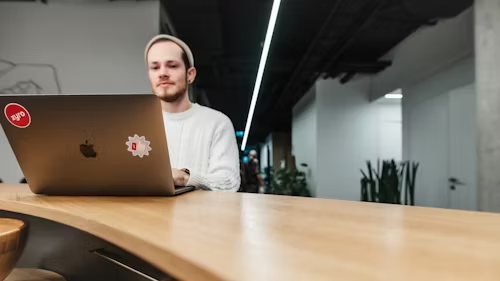
Sponsorship Packages That Work: Maximizing Your Event’s Potential

In the world of event planning, creating effective sponsorship packages is crucial for maximizing your event’s potential. Not only do well-structured sponsorship opportunities provide essential funding, but they also enhance the overall experience for attendees. By understanding what sponsors want and aligning those interests with your event’s goals, you can create compelling packages that drive revenue and foster lasting partnerships. Here are several strategies to help you design sponsorship packages that truly work.


Understand Your Audience

Understand Your Audience and sponsorship

Before you approach potential sponsors, it’s essential to have a clear understanding of your audience. Who attends your event? What are their interests? What industry trends can you leverage? By gathering data on attendee demographics and preferences, you can tailor your sponsorship packages to align with sponsors’ goals. For instance, if your audience is primarily tech-savvy millennials, targeting tech companies as sponsors may yield the best results. You can utilize tools like Google Analytics to gain insights into your audience’s behavior and preferences.

Craft Customized Packages

Before you approach potential sponsors, it’s essential to have a clear understanding of your audience. Who attends your event? What are their interests? What industry trends can you leverage? By gathering data on attendee demographics and preferences, you can tailor your sponsorship packages to align with sponsors’ goals. For instance, if your audience is primarily tech-savvy millennials, targeting tech companies as sponsors may yield the best results. You can utilize tools like Google Analytics to gain insights into your audience’s behavior and preferences.

Highlight the Value Proposition

Clearly communicate the value proposition of your sponsorship packages. What benefits will sponsors gain from their investment? This could include exposure to a specific target audience, brand recognition, or networking opportunities. Make sure to highlight success stories from past sponsors, illustrating how your event helped them achieve their marketing goals.

Additionally, leverage platforms like BrandWorks for branding support. By showcasing how previous sponsors have effectively engaged with attendees through unique branding and marketing strategies, you can build trust and credibility with potential sponsors.

Utilize Digital Marketing Strategies

In today’s digital landscape, it’s essential to incorporate digital marketing strategies into your sponsorship packages. Offer sponsors opportunities for online promotion, such as social media mentions, email marketing features, and website banners. By doing so, you expand their reach beyond the event itself, making your packages more enticing.

Consider collaborating with influencers or utilizing social media advertising to amplify your sponsors’ visibility. An integrated approach can enhance the overall impact of your sponsorships, leading to higher engagement rates and, ultimately, more satisfied sponsors.

Create Engaging Content

Content is king, and it plays a pivotal role in attracting sponsors. Develop high-quality content that resonates with both your audience and potential sponsors. This includes blog posts, videos, and infographics that align with your event’s theme. By positioning your event as a thought leader in your industry, you increase its attractiveness to sponsors seeking to align with innovative and engaging content.

Moreover, consider offering exclusive content to sponsors that they can share with their audiences, further extending the reach of your event. This reciprocal relationship can foster strong partnerships that benefit both parties.

Follow Up and Measure Success

Follow Up and Measure Success with the sponsors

After your event, don’t forget to follow up with your sponsors. Gather feedback on their experience and discuss how they felt their investment paid off. This is crucial for building long-term relationships. Moreover, measuring the success of your sponsorship packages through key performance indicators (KPIs) can help you refine your offerings for future events.

Using tools like Eventbrite to track registration and attendance data can provide valuable insights into the effectiveness of your sponsorship packages. Additionally, sharing this data with your sponsors demonstrates your commitment to their success and opens the door for future collaborations.

Conclusion

Creating effective sponsorship packages is an art that requires a deep understanding of both your audience and potential sponsors. By customizing offerings, highlighting value propositions, and leveraging digital marketing strategies, you can develop packages that not only drive revenue but also enhance the overall event experience. Remember, the goal is to build lasting partnerships that benefit both you and your sponsors. Start implementing these strategies today, and watch your event’s potential soar!

Picture of Abhishek Kapoor

Abhishek Kapoor

Abhishek Kapoor is the founder and creative head of BrandWorks Worldwide. His is an ex-Cvent and has worked in the event space for the last 13 years, providing branding and registration expertise to many clients globally.

Sponsorship Packages That Work: Maximizing Your Event’s Potential Read More »
Got an event approaching soon

15987
AttendeeGain Logo
Scroll to Top